Why Weekly Schedule Maker Came to Be
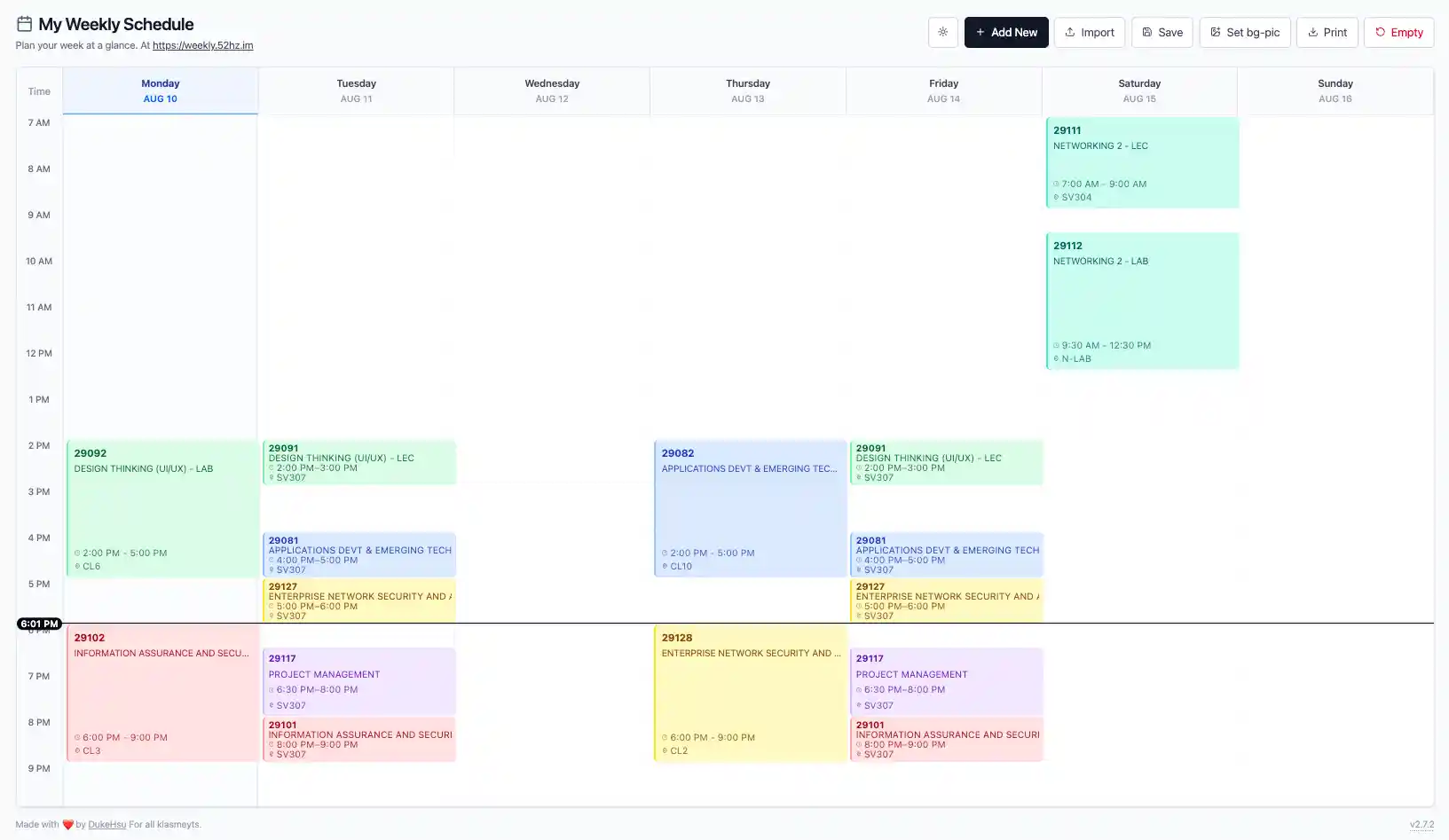
At first, I simply didn’t want to recreate my schedule wallpaper on Canva every single semester. So I threw the idea to Gemini, and it generated a very basic prototype in Canvas based on my description. After that, my curiosity kept pushing me forward to continuously query Gemini, Claude, and ChatGPT to fix and refine it step by step.
What I want to record in this article isn’t just how this tool came to life, but a question I gradually figured out while observing its data: Is it harder to find users, or to retain users?
What GA4 Data Told Me First
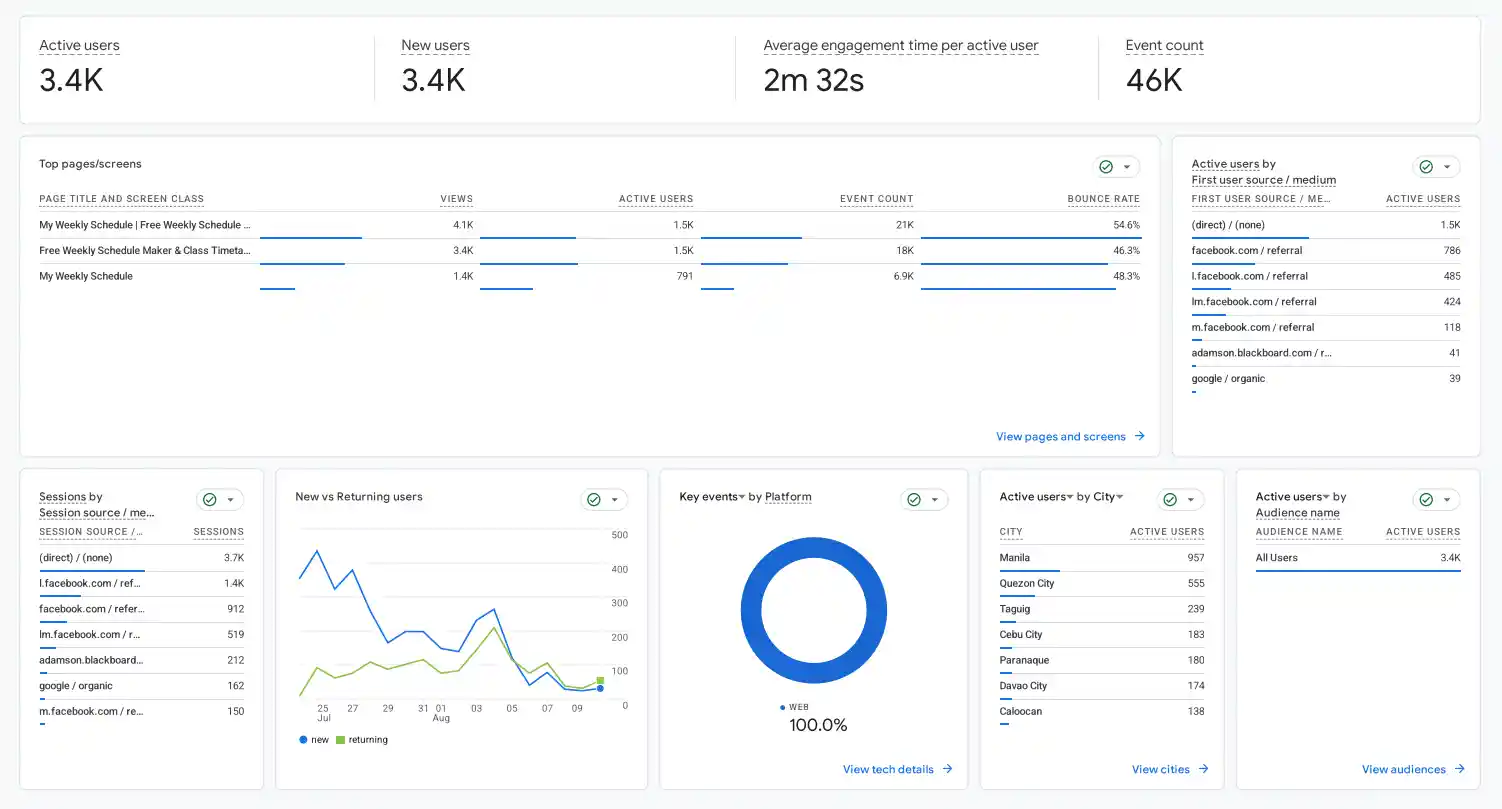
| Metric | 7/24–8/5 | 7/24–8/10 | 5-Day Growth |
|---|---|---|---|
| Active / New Users | 3.1K / 3.14K | 3.4K / 3.4K | Approx. +300 |
| Event Count | 39K | 46K | +7K |
| Avg. Engagement Time | 2m 24s | 2m 32s | +8s |
Looking at this table, the demand was real—during the period right before the semester started, over 200 users actively used it daily. However, a week after school started, the user count dropped to single/double digits. This was actually within my expectations because Weekly Schedule Maker is inherently a “contextual tool”: it is only needed at that specific moment before school starts.
This drop didn’t disappoint me; instead, it made me realize that in today’s internet era, you can build whatever you envision—provided you are willing to observe the world carefully and spot when that specific “context” occurs.
Which Is Harder: Retaining Users or Finding Users?
I released two projects this time:
- BB Better Layout (Chrome Extension) — Aimed to become a long-term tool users rely on. Promoted via static images, resulting in fewer than 1,000 total users plus interactions.
- Weekly Schedule Maker (Web App) — Promoted by recording short video demonstrations, gaining 915+ reactions, ~70 comments, and reaching 3.4K users.
The gap between the two made me realize one thing: people accept and process video content far faster than text and images. When watching a video, the brain barely needs to “translate” the information, placing zero cognitive strain on the viewer. This directly reflects in reach and conversion rates.
However, what truly got me thinking about “retaining vs. finding” was the line on GA4 that plummeted straight down after the second week of school.
My observation is this: most people in this generation live on the internet, where information is almost transparent. If you want to find users, in theory, you just need to spend money to buy user attention from social media platforms, and algorithms will push your product onto the right people’s timelines. Finding users isn’t actually the hardest part.
The real difficulty lies in what comes next: because information flows so quickly, right after you finish a product, someone will soon build an identical—or even better—version. Therefore, retaining users is the harder challenge that requires long-term cultivation.
Possible Solutions for User Retention
Based on the above observations, I currently have two directions in mind:
Capitalize on “Natural Recurrent Timing”: For instance, right before each semester starts and ends. Actively remind users around these cycles that “it’s time to prepare your new semester schedule,” turning a one-time tool into a rhythmic habit.
Attempt Retention Right After Critical Actions: For example, after a user exports their schedule, trigger a modal asking if they’d like to join the Facebook page, converting one-time traffic into a channel for long-term engagement.
Neither solution has been validated yet. The next step is to actually build them and see how the data responds.
What This Experience Taught Me
You don’t need to wait until it’s perfect. Build simple, share early, improve together.
Sometimes overthinking only holds you back. When an idea strikes, just do it—you will learn a lot through trial and error and grow stronger along the way.